Showing posts with label tips. Show all posts

June 24, 2014

6 Reasons To EAT Salmon


Salmon's reputation as a healthy food is largely based on its unusual omega-3 fatty acid content. It is normal for 4 ounces of salmon to contain at least 2 grams of omega-3 fats - more than the average U.S. adult gets from all food over the course of several days. This omega-3 fat comes in two forms: EPA (eicosapentaenoic acid) and DHA (docosahexaenoic acid). However, salmon is also rich in other properties, such as vitamin D and selenium, each of which have their own powerful health benefits.

Intriguing research into the protein and amino acid content of this fish has found that salmon also contains small bioactive protein molecules (called bioactive peptides) that may provide protection for joint cartilage, support with insulin effectiveness, and control of inflammation in the digestive tract. 

One thing to bear in mind, though, is that all of these benefits are derived from the consumption of wild salmon, and the farmed kind is an entirely different kettle of fish.

Here are 6 health benefits of salmon:


Inflammation

Research on fish intake and joint protection has shown that the omega-3 fatty acids found in salmon can be converted by the body into three types of compounds that prevent chronic inflammation. What's especially interesting is that it combines these anti-inflammatory benefits with anti-inflammatory relief related not to fat but to protein.

Recent studies show the presence of bioactive peptides in salmon may support healthy joint cartilage and other types of tissue. One bioactive peptide named calcitonin has been of special interest because it is also made in the human body by the thyroid gland, and we know that it helps regulate and stabilize the balance of collagen and minerals in bone and surrounding tissue. Such peptides may combine with salmon's omega-3 molecules to provide powerful anti-inflammatory benefits for joints. The incredibly high content of vitamin D and selenium found in salmon have also been shown to be key agents in preventing unwanted inflammation.

Cognitive Function

Much research has proven docosahexaenoic acid (DHA) to be the most important fat found in the brain, and the substantial content of this omega-3 fatty acid in salmon explains the benefits of salmon intake for thinking and the decreased risk of certain brain-related problems. Salmon intake is associated with decreased chances of depression, hostility in some studies of teenagers, and decreased cognitive decline in older people. Some studies have also demonstrated an association between IQ and a diet rich in omega-3 fatty acids.

Of particular interest is the recent discovery of what are called protectins. These are special compounds made from DHA which studies have shown play an important role as anti-inflammatory molecules, particularly when produced by nerve tissue. There has been speculation that some of the brain-related value of omega-3 fish intake may be due to conversion of the DHA in these fish to protectins that can aid in preventing excessive inflammation. Vitamin D has also been shown to be a major factor in supporting cognitive function, and salmon abounds in this nutrient.

Cancer Prevention

Vitamin D has been shown to play a crucial role in lowering the risk of several types of cancer, including breast, prostate, and colorectal cancer. Salmon contains particularly high levels of vitamin D and selenium, which is also associated with prevention of certain types of cancer, including colorectal cancer.

Omega-3 fat is also connected to decreased risk for several types of cancer, including colorectal cancer, prostate cancer, and breast cancer. Regular omega-3 intake has been proven particularly effective against the blood cell or lymph cell-related cancers such as leukemia, multiple myeloma, and non-Hodgkins lymphoma.

Eye Health

It is well known that fish oil is good for improving vision. It also helps in avoiding age related macular degeneration. The omega-3 fats found in salmon have been demonstrated to be effective in combating both macular degeneration and chronic dry eye. In the case of macular degeneration, two servings of salmon per week is enough to significantly decrease risk.

Studies on dry eye have begun to focus specifically on the neuroprotectins made from DHA in salmon and other omega-3 fish. These omega-3 derived molecules might aid in preventing chronic dry eye by alleviating inflammation.


Cardiovascular Health

Intake of salmon has been connected to a decreased risk of numerous cardiovascular problems, such as heart attack, stroke, heart arrhythmia and high blood pressure. Consumption of omega-3-containing salmon is also linked with improved metabolic markers for cardiovascular disease. 

The high levels of the antioxidant selenium in salmon have also been shown to be especially important in cardiovascular protection.


Skin and Hair Health

The omega-3s found in salmon lock moisture into skin cells, encouraging the production of strong collagen and elastin fibers, which contribute to more youthful looking skin. Omega-3s have also been known to alleviate skin blemishes and maintain a good luster of the hair.

Omega-3s provide nourishment to hair follicles, helping hair grow healthy and preventing hair loss. A rich supply of proteins is also important for hair growth. The high protein content of salmon helps maintain strong, healthy hair.

June 14, 2014

10 Healthy Breakfast Ideas


You get up in the morning, you rush to get ready for work, you rush out the door without a breakfast. Perhaps you grab a bagel and cream cheese, perhaps a muffin, perhaps an Egg McMuffin. If you’re lucky, you get a pastry, a hearty breakfast of pancakes and sausage and eggs, or an English fry-up.

Unfortunately, when it comes to being healthy, none of these options is a great way to start your day. Either we don’t have time for breakfast, or we don’t have many healthy options.

The first problem is a problem, because it means that you start the day with an empty stomach. That means that by the time you are getting into the swing of work, your blood-sugar levels are dangerously low. 

The result: you need an instant sugar fix, which usually means a doughnut or pastry or some other unhealthy choice.

The second problem is also a real problem, because traditional breakfasts don’t usually come in healthy flavors. Here are the options that most people think of as breakfast:

  • Too sugary or carb-filled: Pancakes, waffles, toast, donuts, pastries, scones, bagels, pies, sugar cereals, breakfast bars, muffins (which, let’s face it, are usually just cake). I’m not anti-carb, but the problem with many breakfasts is that they are low in fat and protein, and nothing but empty carb calories. This starts your day with a high blood-sugar level, which your body will quickly adjust for and drop, and you’ll be on a roller-coaster blood-sugar ride all day. 
  • Too fatty: Fried eggs, sausages, bacon, cream cheese on your bagels, cheesy omelets, Egg McMuffins, Sausage McMuffins, hash browns, anything English or Scottish.
What does that leave us with? 
Actually, there are a lot of options. The 10 below are just a few ideas, but I’m sure you can think of many more. Look for protein without too much saturated fat. Look for whole-grain carbs. Look for low-fat dairy or soy options. Look for fiber and nutrients.

But how do you find the time? 
You make the time. Get up 15 minutes earlier. Pack something to eat on the road or when you first get to work. Prepare it the night before if necessary. I recommend the first option — waking a little earlier — as it’s nice to be able to have a nice cup of tea or coffee with your breakfast, relaxing before the rush of the day starts.

  1. Oatmeal, flaxseed, blueberries & almonds. To me, this is the perfect breakfast. Steel-cut oatmeal is probably the healthier choice, but if you are in a hurry, the instant kind will do fine (it doesn’t have as much fiber, but the other ingredients make up for that). After microwaving the oatmeal, add ground flaxseed, frozen blueberries, sliced almonds. You can add a little cinnamon and honey (not a lot) if you’re using the non-instant oatmeal. That’s four power foods, full of fiber and nutrients and protein and good fats, with only a couple of minutes of prep time. And very tasty!
  2. Kashi Golean Crunch. Actually, any whole-grain, high-fiber cereal is a good choice, but I mention this particular one because it’s a favorite of mine. It has a high amount of protein and fiber, low sugar. Add low-fat milk or soy milk (which has 1/3 the saturated fat of 1% milk), perhaps some berries if you like.
  3. Scrambled tofu. Healthier than scrambled eggs. Add some onions, green peppers or other veggies, some light soy sauce or tamari, maybe some garlic powder, and black pepper, stir-fry with a little olive oil. Eat with whole-grain toast. Fast and delicious.
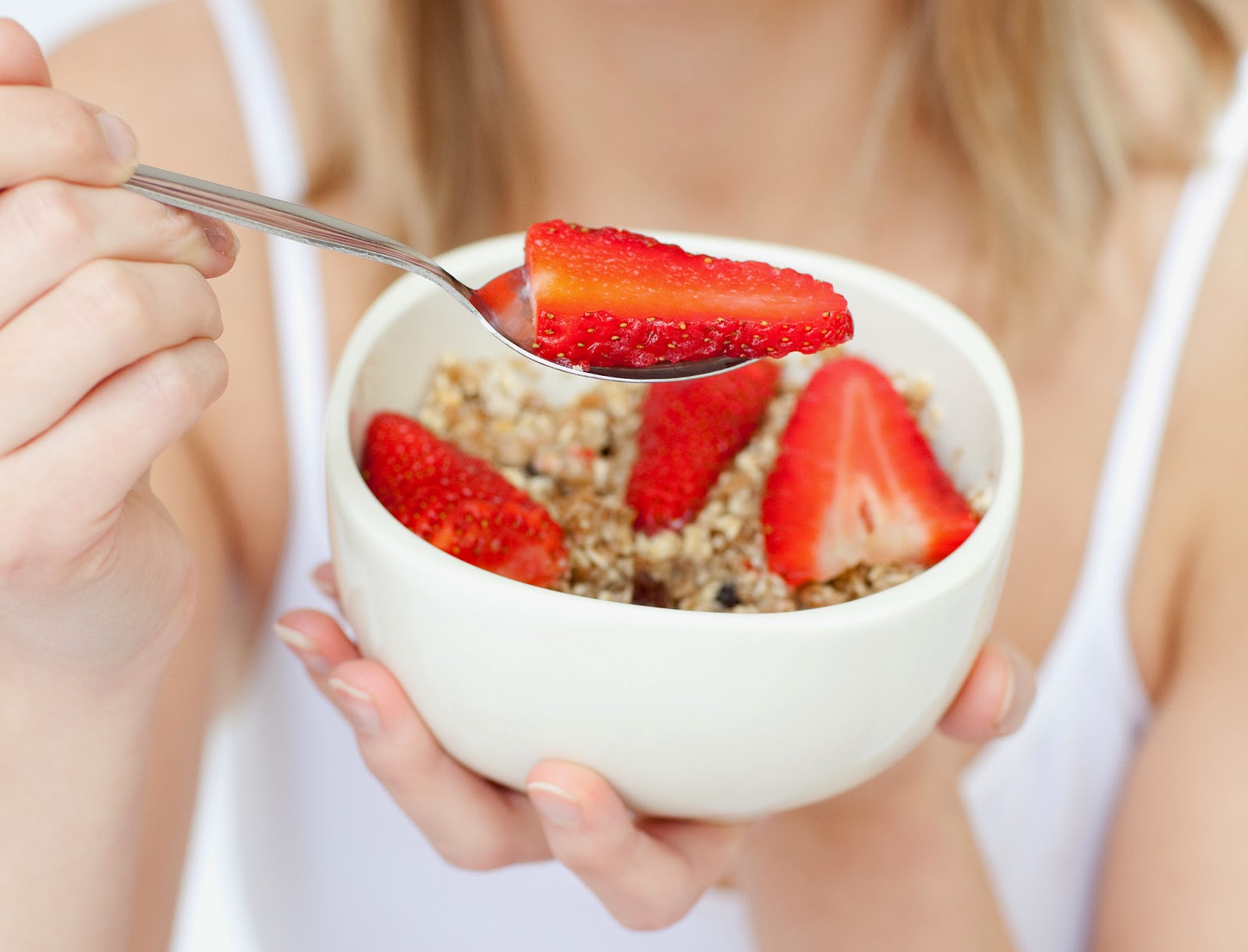
  4. Fresh berries, yogurt, granola. Get low-fat yogurt (not non-fat, as it often has too much sugar) or soy yogurt, cut up some berries or other fruits, add some healthy cereal. I actually use the Kashi Golean Crunch instead of granola, as many brands of granola have way too much fat and/or sugar.
  5. Grapefruit with whole-wheat toast & almond butter. Add a little sugar on top of the grapefruit, and it’s actually pretty good. The almond butter is healthier than peanut-butter, with lots of good protein to fill you up.
  6. Fresh fruit salad. Cut up some apples, melons, berries, oranges, pears, bananas, grapes … any or all or whatever your favorite fruits are. Add a little bit of lime or lemon juice. Perfect.
  7. Protein shake with extras. I use soy protein powder, but whey works well too. Blend up with low-fat milk or soy milk, some frozen blueberries, and perhaps some almond butter or oatmeal. That may sound weird, but it’s actually pretty good, and pretty filling. A little ground flax seed works well too.
  8. Eggs with peppers. I’m not a fan of eggs, but many people love them. Egg whites are healthier than whole eggs. Scramble with a little olive oil, red and green bell peppers, maybe broccoli, onions, black pepper. Goes well with whole-wheat toast.
  9. Cottage cheese and fruit. Get low-fat cottage cheese. Add any kind of fruit. Apples, citrus, berries.
  10. French Toast With Raspberry Syrup. A little cinnamon in the batter adds an extra hint of spice; top the toast with chopped roasted macadamia nuts if you’re feeling fancy.

June 12, 2014

5 Tips To Burn Fats

I'm going to share with you 5 practical tips on how to turn your body into a fat-burning machine – information that you can implement on your daily basis, both in and out of the gym or any workout environment. A lot of times they say that 'you are what you eat' so it's actually very important that you know how to work on what you eat first rather than just jumping into the workout schedule and hope everything goes as planned. Instead of quantity specific amounts, I'm going to give you simple ideas that you can almost immediately put it to plan in your everyday life. So let's get started.

Eat Fiber

A high-fiber diet decreases fat and cholesterol absorption in your intestine (preventing fat storage), slows glucose absorption in the bloodstream (meaning more sugar gets burnt as energy, less gets stored as fat), stabilizes insulin levels and delays stomach emptying (both of which decrease your appetite), and makes you full faster (so you eat less). Research has shown that a low-fat, high-fiber diet results in nearly three times more weight loss than a low-fat, low-fiber diet. 

So how do you get your fiber? Here’s how I get mine: 
  • 1 fully loaded salad
  • 1 bowl of oatmeal
  • 2-3 raw fruits every day (fruit bonus: vitamin C in citrus fruit can also help burn fat)

Eat Calcium

Research shows that three or four daily servings of low-fat dairy products can help reduce body fat. Higher levels of calcium stored in the fat cells may help enhance fat breakdown, as well as induce an increase in thermogenesis (the body’s core temperature). The best calcium should come from dairy products like low-fat milk, yogurt and cottage cheese (and not from a calcium supplement). Other good sources, especially for those who are lactose intolerant, include dark leafy vegetables, salmon, almonds, and oats (notice the extra fiber bonus).


Eat Breakfast

Breakfast is the most important meal of the day. Studies have shown that people who include a large and healthy breakfast in their diet lose significantly greater amounts of fat than those who avoid breakfast. Skipping breakfast will not help you shed extra pounds, but may instead result in muscle loss and metabolism decreases, both of which hinder your fat-burning ability. A great breakfast example is a large glass of water with a bowl of oatmeal, fresh fruit and nuts. Just remember: breakfast can also work against you if it’s not healthy: fried meats, sweet muffins and croissants, sugar loaded cereals, or processed packages do not count as a healthy breakfast!

Eat Frequently

You’ve heard it a million times before: 5-6 small meals a day is better than 3 large meals. I'd like to step that up a bit: as high as 10 times a day or more may be necessary, depending on your energy consumption and needs. Here's an example (from my personal nutrition log): 

  1. Banana 7AM
  2. Oatmeal w/ raisins 9AM
  3. Handful almonds 10:30AM
  4. Three turkey slices 12PM
  5. One yogurt 1PM
  6. Apple 2PM
  7. Large salad 4:30PM
  8. One protein bar 7:00PM
  9. Handful raisins 8:15PM
  10. 1 scramble egg with spinach 9PM (bed at 11PM)
The philosophy behind eating frequently is that the physical act of digestion has a metabolic cost, and by continually feeding, you are maintaining a higher metabolic rate. As long as your grazing is healthy, this results in more calories burnt throughout the day. On the flip side, eating too infrequently causes your body go into starvation mode and conserve energy, which results in increased fat storage and lower digestive and overall metabolism.

Eat Water

Your body constantly uses water to create energy, build muscle, and burn fat, and without adequate water, studies have shown that the muscles are less active, the metabolism drops, and your body burns fat less efficiently. This slight decrease in metabolism can add up to over 10 pounds of fat a year! Water also assists in suppressing the appetite and giving you a “full feeling”. So drink several glasses of water each day, drink a glass of water at least 30 minutes before your workout, sip water regularly at the gym, and drink a glass of water after your workout (speeds up recovery too!). Many naturally occurring foods, such as fruits and vegetables, are also high in water content (as well as fiber, vitamins, minerals, phytonutrients, etc.), so this is another great way to get your H2O.

Cutting Calories Does NOT Burn FATS


You may have heard that you’ll burn fat if you consume fewer calories (calories in) than the amount you burn as fuel (calories out). Anyone telling you this is either completely ignorant or has little understanding of how the human body works.

Probably the most common thing I see people doing wrong in their pursuit of fat loss is that they cut calories way too low. Everyone is in the pursuit of instant results and many believe that drastically reducing their calorie intake is the fastest way to shed those unwanted pounds. Little do they know that by reducing their calorie intake to such low levels makes it even harder to lose fat and get in great shape.

DESTROYS OUR METABOLISM

Our metabolism is the most important factor for successful fat loss. We should train and eat in order to stimulate it. The simplest way to have a fast metabolism is to have muscle. This is because muscle is metabolically active...by that I mean that it burns calories. Every extra pound of muscle we have burns an extra 50-100 calories a day. This is why it is imperative to add or at try to maintain as much muscle as possible when trying to lose fat.

Compare our metabolism to that of a car engine. The larger the engine the more fuel it burns, even when its sitting at the lights. That's how we want our metabolism to run. A faster metabolism helps us burn more calories in every activity we do, including sleeping. Now obviously, we don't want a metabolism than burns fuel as slow as a scooter!

Now the problem with low calorie dieting is that it burns a lot of muscle, which slows down our metabolism. This happens because the body realises that there is less food coming in, so it slows down how many calories it burns so that it can survive on the newer lower calorie intake. It becomes a bit more careful of using up energy, and becomes more selective. This is obviously bad!

The reason this happens, is because our excess body fat, is our last ditch survival plan. It is stored to prepare for times of food shortage. You see, if we cut calories too far, our body will realize that food is scarce and it will go into a state of panic. It will do its best then to hang onto its fat stores because it doesn't know how long this food shortage is going to last. Since there is not enough food coming in, and our body wants to hang onto our fat, it alternatively breaks down muscle tissue to use as energy. This loss of muscle means a slower metabolism.

You may have experienced this first hand, getting good initial results on a low calorie diet for a few weeks. However after a few weeks your results have come to a standstill. This is because your metabolism has slowed right down to adjust to the calorie intake and is burning next to no fat, because it doesn't want to!


TOO HARD TO STICK TO

Let's face it, its no fun eating a low calorie diet. Constantly feeling hungry and tired, who wants that? Restricted calorie diets are just way too hard to stick too. They deprive us of not only eating enough food, but also of eating foods that we enjoy. This double whammy causes our cravings to intensify to the point that it becomes unbearable, resulting in us giving up.

LACK CONSISTENCY

To achieve dramatic and long term fat loss, you have to be consistent for a considerable amount of time. However, low calorie diets are just too extreme and unrealistic to stick to for any considerable period of time. They more often then not, result in 'yo-yo dieting'.

WEIGHT GAIN

Obviously gaining weight makes it hard to actually lose weight. Problem is that's exactly what restricted calorie diets cause. The combination of losing muscle from low calorie dieting and the undeniable cravings they create, cause us to put on even more weight. The lost muscle now results in a slower metabolism, so if you go back to your normal pattern of eating, you now might experience some weight gain. Problem is, after a low calorie diet, we don't usually return to our normal eating patterns. The cravings created through dieting cause us to binge eat and pig out for a while to satisfy our urges (well that's what I did anyway!).

Well then what should you do? The answer is simple. Eat enough food to ensure your body that it is safe to use its body fat stores as an energy source. If the body realises that there is a plentiful supply of food coming in, it will think that keeping fat on the body is useless and it will start using it more readily.

So how much is enough? I would recommend eating approximately your bodyweight in pounds multiplied by 13. For example a 200lb man would eat approximately 2600 calories a day. You should never reduce your calories 500 below this number. So eat around this number, exercise more, be consistent and the fat will melt off you in no time.

One last thing, forget the scales. Men store fat around the waist and women the hips and thighs. So if your pants are getting looser, you know its working.

Remember try to get in fantastic shape in 5-6 months instead of 1-2. If you try to do it in only 1-2 months you will get stuck in the yo-yo dieting cycle. You may look exactly the same 5 years from now! Taking it slower will actually get you there faster in the long run and is much more enjoyable, and pain free.