The Problem With Most Diet Plans
New fad diets in books and magazines and the Internet are a dime a dozen. Some of them are actually pretty decent, but almost all of them have one single flaw that will make it very difficult for anyone to stick to them.The flaw?
They try to get you to change your entire diet at once. That just doesn’t work for most people. I’ve tried lots of diets, and for the first week, I’m extremely enthusiastic and determined. But such a drastic change in diet is hard to sustain, and soon you give in to temptation and then it falls apart. We’ve all been there.The Power of Small Changes
That it is about is making changes to your diet one small step at a time. Baby steps. The miracle of this is that we adjust to these small changes after a couple weeks, until they seem normal and we don’t feel like we’re depriving ourselves of anything.Take meat for example. Let’s say you wanted to become a vegetarian, and you cut out all meat from your diet completely. You’d feel very deprived, and you might have a very hard time. Most people wouldn’t last very long — maybe a week or two at most — before caving in and eating meat and feeling guilty.
But let’s say instead that you just started with beef. Well, at dinner tonight, you probably wouldn’t notice much because you could have chicken or fish or turkey or pork — all the stuff you might normally eat. After a few weeks, going without beef would seem normal, and you probably wouldn’t miss it much.
Repeat that process for pork, and soon you’ve cut red meat from your diet (assuming you don’t eat much venison or buffalo or otter or whatnot). Then do chicken — this might be a difficult stage for many — and just eat seafood for awhile. After a few weeks of that, though, you’d get used to it. Next step is dropping seafood, and soon you’re a vegetarian who doesn’t miss meat one bit.
I’m not saying you need to become a vegetarian. I’m saying that small steps, taken a few weeks at a time, makes the process much easier. I’ve done it with meat, with fried foods, with sweets, with eating more fruits and whole grains, and many other food changes, and it’s worked every time.
You get used to it, if you do it a bit at a time.
The 12 things you can do to live healthy
Actually, what follows is just an example. You can use as many steps as you want, making whatever changes you want. This is just a sample of what can be done, to give you some ideas.The rules:
- Apply these changes, one at a time, until you get used to them. This will probably be 3-4 weeks per step. But in a year’s time, you’ll be eating as healthy as possible.
- Focus as much energy as possible on each change for at least a couple weeks. Don’t deviate if you can. Don’t worry, you’ll get used to it.
- If it seems too difficult, make a smaller step instead. For example, instead of cutting out sweets, just cut out cakes and donuts. Smaller steps make things much easier.
- Always replace bad food with healthy food that you enjoy. What I’ve given are just examples — everyone has different tastes.
OK, so here’s an example of the 12 things you can do to live healthy:
- Eat fruits for snacks. If you snack on junk food during the day, have some fruits by your side at all times. When you’re feeling hungry for a snack, eat a fruit. One of those bags of small apples is a handy thing — you can’t go wrong with apples.
- Drink water instead of soda. The only thing I drink (besides an occasional beer) is water. I’m not saying you need to do that, but try to cut out sugary drinks a bit at a time, replacing them with water.
- Eat whole grain bread. If you eat white bread or bagels or whatever, replace them with whole-grain versions. Be sure to look at the ingredients — it shouldn’t say enriched wheat flour, but whole grain. Also try to avoid breads with high-fructose corn syrup (actually, avoid that ingredient in anything).
- Add fresh veggies to dinner. If you don’t already, have some steamed greens with dinner. Cut out a less healthy side dish if you usually eat something else.
- Cut out red meat. You can still eat poultry and seafood for now. You can later cut those out too if you want.
- Make pizza instead of ordering. Homemade pizza is the best, and if you haven’t made it yet, you should. The simple way is to get a ready-made whole-wheat crust, although making your own tastes even better. Start with the simple version, though, as you don’t want to make things too difficult. For the simple version, just add some gourmet spaghetti sauce (not Ragu), cut up some veggies (I like tomatoes and mushrooms and spinach and olives, but you can use anything, even potatoes). Brush the veggies with some olive oil. You can add grated cheese or soy cheese if you want, though it’s not necessary. Bake till it looks cooked. Mmmm..
- Nuts instead of chips. If you normally snack on chips, try unsalted peanuts or raw almonds.
- Soy milk instead of whole milk. Whole milk is fatty (not to mention the suffering done by the cows in modern dairy factories). Soy milk is much healthier. You get used to it after awhile, like all the changes on this list, but if soy milk is a problem at least drink 1% milk.
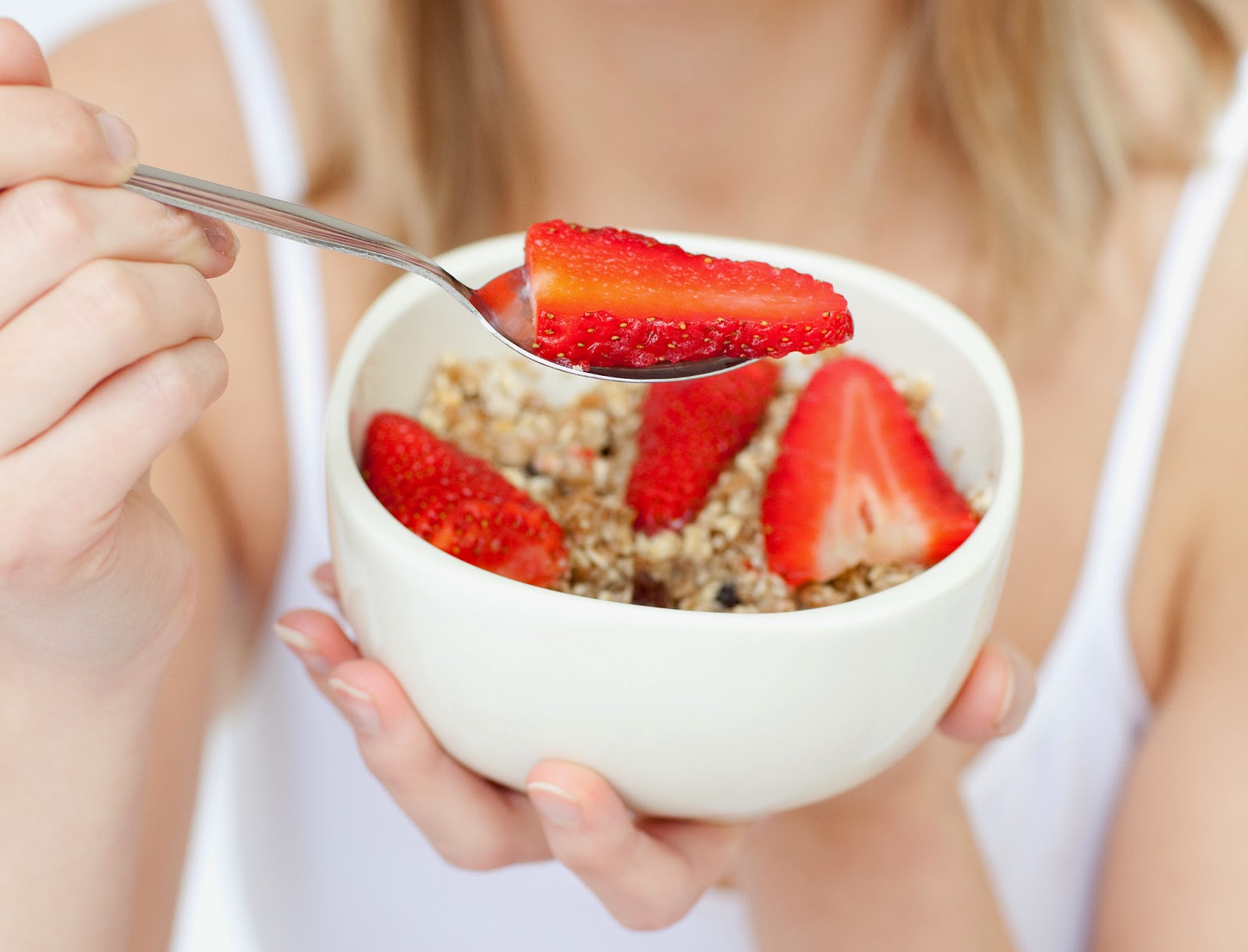
- Whole grain cereal. If you eat sugary cereal, try a whole-grain cereal instead.
- Berries instead of candy. This is a recent change of mine, and it’s actually been much easier than I thought. I used to snack on chocolate candy all the time, but now I try to eat berries to satisfy my sweet cravings and it works!
- Scrambled tofu instead of fried eggs. Scrambled tofu is a secret vegan wonder.
- Try some great veggie dinners. There are so many good ones out there if you haven’t tried them.
The key is to persevere, taking baby steps, one step at a time. However slow you are, no matter what, if you're persevering, you'll eventually get there. Good luck!